

Why Ngorongoro Remains One of Tanzania’s Biggest Tourism Magnets
Ngorongoro was Tanzania’s most visited tourist attraction in 2025, welcoming 859,933 visitors and attracting 14.2% of international visitors, according to the 2025 International Visitors’ Exit Survey Report.
ARUSHA, TANZANIA — September 1, 2026
The Ngorongoro Conservation Area emerged as Tanzania’s most visited tourist attraction in 2025, recording 859,933 visitors, according to Tanzania’s 2025 International Visitors’ Exit Survey Report, published by the National Bureau of Statistics (NBS).
The report, released in July 2026, forms part of Tanzania’s annual assessment of international visitor arrivals, travel patterns and tourism performance.
According to the findings, 14.2 percent of international visitors to Tanzania in 2025 visited the Ngorongoro Conservation Area, placing the destination at the forefront of the country’s major tourism attractions.
The result reinforces Ngorongoro’s significance within Tanzania’s tourism economy and its enduring appeal in the international safari and heritage tourism market.
A Destination Beyond the Crater
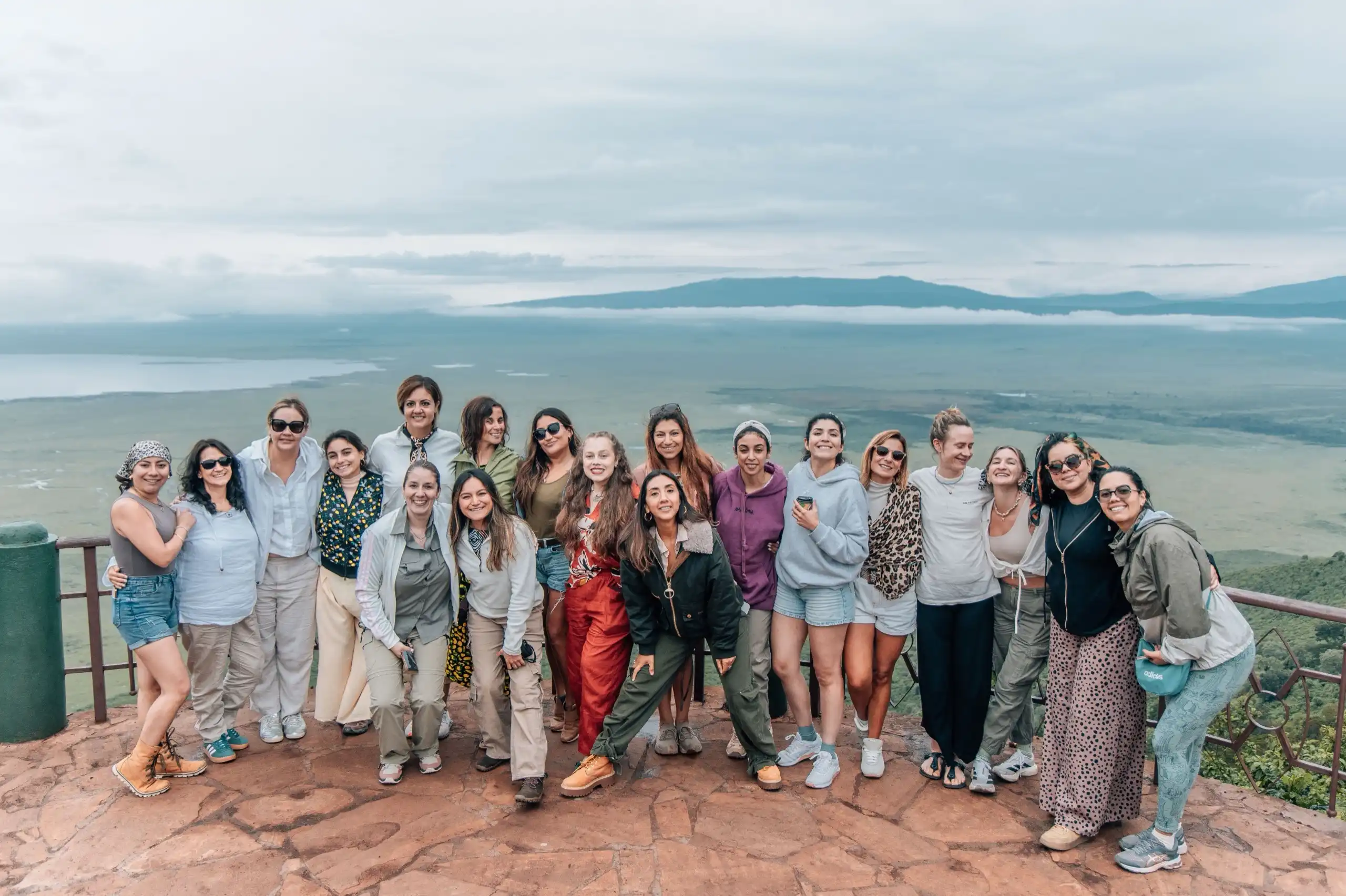
Internationally recognised primarily for its spectacular volcanic crater and exceptional concentration of wildlife, the Ngorongoro Conservation Area offers a considerably broader tourism experience.
The area encompasses the Ngorongoro, Olmoti and Empakai craters, the Ndutu plains, the Shifting Sands, Endoro Waterfalls, Elephant Caves, Mount Lolmalasin, Nasera Rock, the Northern Highlands Forest, as well as the archaeological landscapes of Olduvai Gorge and Laetoli.
The Laetoli footprints, estimated to be approximately 3.6 million years old, are among the most significant archaeological discoveries associated with the evolution of early humans.
Olduvai Gorge, meanwhile, is one of the world's most important paleoanthropological sites, adding a distinctive scientific and cultural dimension to the destination.
Together, these resources allow visitors to experience wildlife, dramatic landscapes, geological formations and some of humanity's earliest archaeological evidence within one conservation landscape.
Global Recognition Through World Travel Awards
Ngorongoro's international reputation has also been reinforced by the World Travel Awards (WTA).
The Ngorongoro Conservation Area was named Africa’s Leading Tourist Attraction in 2025, following an earlier win in 2023. The official World Travel Awards record confirms both victories.
The 2025 award placed Ngorongoro among leading African attractions including the Pyramids of Giza, Okavango Delta, Table Mountain and Mount Kilimanjaro.
Ngorongoro was also among the nominees for the World’s Leading Tourist Attraction 2025, placing it within a highly competitive global field of iconic destinations.
The recognition comes within a particularly strong year for Tanzania's international tourism profile. In the same 2025 World Travel Awards cycle, Tanzania was named Africa’s Leading Destination, while several other Tanzanian tourism products and attractions also received continental awards.
Conservation, Heritage and Tourism
Established in 1959, the Ngorongoro Conservation Area covers approximately 8,292 square kilometres and represents an unusual model in which wildlife conservation, tourism and the continued presence of pastoral communities coexist within a protected landscape.
Its international significance is reflected in several UNESCO-related designations, including Ngorongoro as a Man and the Biosphere Reserve and a Mixed World Heritage Site, alongside the Ngorongoro-Lengai UNESCO Global Geopark.
These recognitions reflect the area's exceptional combination of biodiversity, geology, archaeology, cultural heritage and ecological significance.
Tourism Growth and Destination Promotion
The rise in visitor numbers at Ngorongoro forms part of a broader expansion of Tanzania's international tourism sector.
The Government and tourism stakeholders have continued to promote Tanzania across international tourism markets through trade fairs, destination-marketing campaigns and global tourism platforms.
The strategy is increasingly focused not only on attracting more visitors, but also on encouraging longer stays and broader travel itineraries that connect Tanzania's diverse tourism products.
For Ngorongoro, this includes encouraging visitors to explore attractions beyond the crater, helping distribute tourism activity across the wider conservation area.
Improved visitor services and tourism infrastructure are also important components of this strategy, supporting both visitor experience and the sustainable management of tourism flows.
Ngorongoro Within the Destination Tanzania Story
Ngorongoro forms part of a wider tourism proposition that includes the Serengeti, Mount Kilimanjaro, Zanzibar, Nyerere National Park, cultural heritage sites and the country's marine and coastal destinations.
Its distinctive advantage lies in the convergence of several forms of tourism within a single landscape: wildlife, conservation, archaeology, geology, culture and adventure.
This diversity strengthens Tanzania's position as a destination capable of offering experiences that extend well beyond conventional safari tourism.
The country's success at the 2025 World Travel Awards further illustrates this breadth. Tanzania was named Africa’s Leading Destination, while the Serengeti, Kilimanjaro National Park, Zanzibar and other Tanzanian tourism products also received continental recognition.
A Strong Indicator of Tanzania’s Tourism Appeal
Ngorongoro's 859,933 visitors in 2025 provide an important indicator of the destination's continuing international appeal.
The figure also highlights the strategic importance of protecting and sustainably managing the natural, cultural and archaeological resources that underpin tourism in the conservation area.
As Tanzania seeks to expand its tourism sector, the challenge will be to balance continued growth in international visitation with conservation, responsible tourism, quality visitor experiences and sustainable benefits for local communities.
Where Nature and Human History Converge
Ngorongoro offers something few destinations can match: a landscape where wildlife, volcanic geology, human history and living cultural heritage intersect.
Its visitor numbers, international recognition and extraordinary concentration of natural and archaeological assets have established it as one of Tanzania's most important tourism destinations.
With 859,933 visitors recorded in 2025 and the title of Africa’s Leading Tourist Attraction 2025, Ngorongoro continues to strengthen Tanzania's position on the global tourism map.
Ngorongoro is more than a safari destination. It is a place where the story of nature and the story of humanity meet