

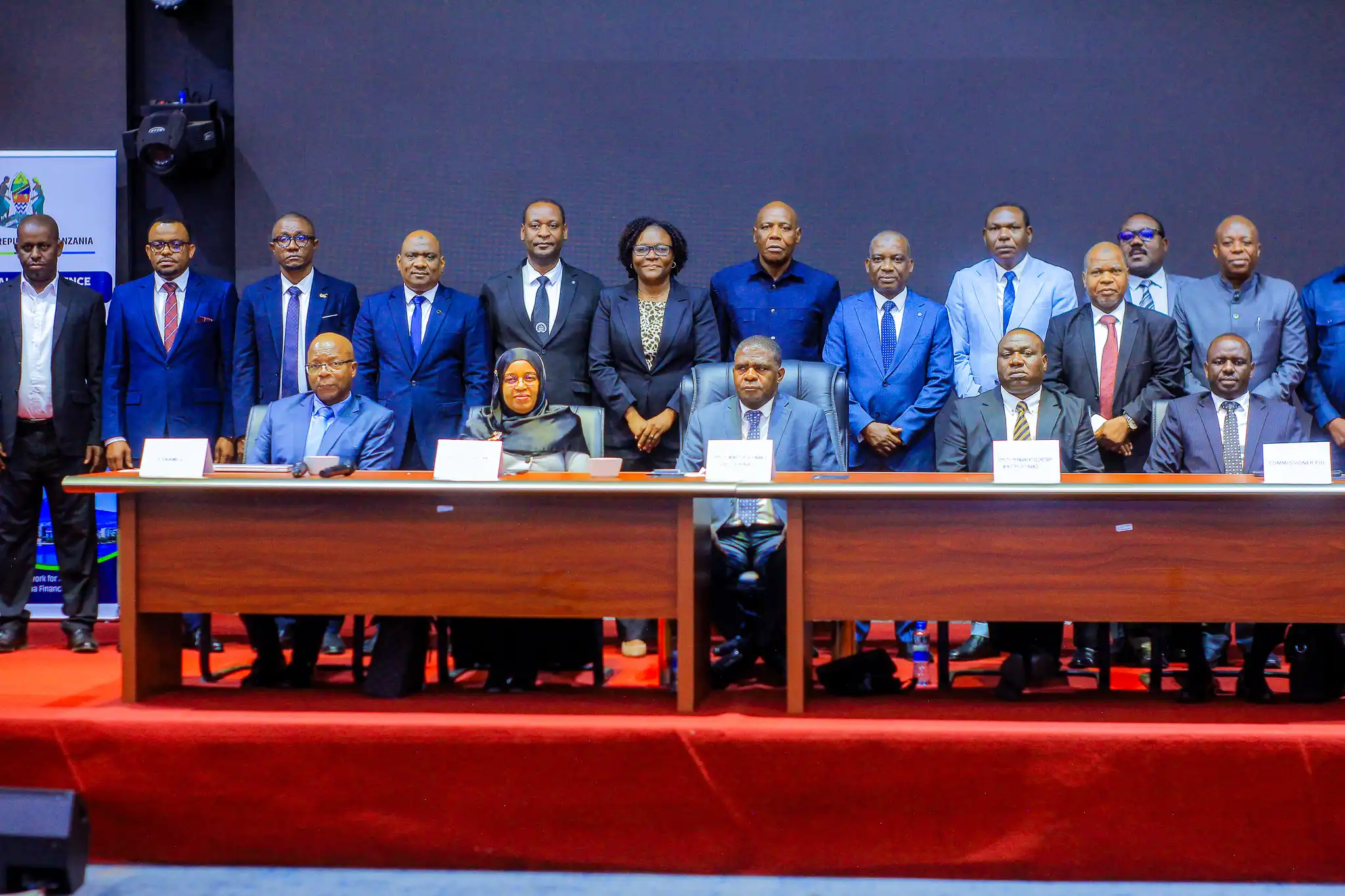
Tanzania Intensifies Fight Against Financial Crime Ahead of 2028 ESAAMLG Review
Tanzania has intensified preparations for its 2028 ESAAMLG mutual evaluation, calling for stronger institutional cooperation, accountability, and compliance with international standards against money laundering, terrorist financing, and proliferation financing.
MOROGORO, Tanzania | November 12, 2026
The Government of Tanzania has called on all institutions responsible for combating money laundering, terrorist financing, and proliferation financing to strengthen coordination, accountability, and institutional cooperation as the country prepares for its Third Round of Anti-Money Laundering, Counter-Terrorist Financing and Counter-Proliferation Financing (AML/CFT/CPF) Mutual Evaluation, scheduled for 2028.
The directive was issued by the Deputy Minister for Finance, Hon. Eng. Mshamu Ali Munde (MP), on behalf of the Minister for Finance, Hon. Ambassador Khamis Mussa Omar (MP), during the opening of a preparatory training programme held at Cate Hotel in Morogoro under the auspices of the Eastern and Southern Africa Anti-Money Laundering Group (ESAAMLG).
Government Prioritises Institutional Coordination and Accountability
Addressing participants, Deputy Minister Munde reaffirmed the Government's commitment to ensuring that Tanzania is fully prepared for the 2028 assessment through strengthened legal frameworks, regulatory oversight, and effective implementation of institutional responsibilities.
He emphasised that combating financial crimes requires a coordinated national approach involving all relevant institutions rather than relying solely on the Financial Intelligence Unit (FIU).
According to the Deputy Minister, institutions such as the Tanzania Police Force, the Prevention and Combating of Corruption Bureau (PCCB), and the Tanzania Intelligence and Security Service (TISS) must work collectively to strengthen the country's capacity to prevent, detect, investigate, and address financial crimes.
He noted that although Tanzania has made progress in previous assessments, preparations for the 2028 evaluation require greater attention to implementing international standards and demonstrating measurable results from the work undertaken by responsible institutions.
Tanzania Focuses on Effective Implementation of International AML/CFT/CPF Standards
Deputy Minister Munde explained that the training programme aims to strengthen participants' understanding of international standards, clarify institutional responsibilities, and improve coordination and information-sharing mechanisms.
He said the programme would also provide an opportunity for institutions to exchange experiences, identify implementation challenges, and develop joint strategies to address weaknesses in the national financial crime prevention framework.
The Deputy Minister stressed that shortcomings at any stage of the criminal justice process, from investigations and prosecutions to judicial proceedings and sentencing, could undermine the effectiveness of the entire system.
He further underscored that preparing for the assessment is a national responsibility requiring sustained cooperation and accountability across government agencies, financial institutions, law enforcement bodies, and other stakeholders.
Strengthening the framework, he said, is essential to safeguarding Tanzania's financial system, protecting public resources, and reinforcing international partners' confidence in the country's economy.
ESAAMLG Commends Tanzania's Commitment to Combating Financial Crime
Speaking at the event, Mr. Joseph Jagada, representing the ESAAMLG Executive Secretary, commended Tanzania for demonstrating strong commitment and political will in strengthening mechanisms to combat financial crimes, including money laundering and terrorist financing.
He observed that the participation of senior government officials reflected the country's determination to prioritise preparations for the upcoming assessment.
Mr. Jagada described Tanzania's commitment as a positive example for other ESAAMLG member countries and encouraged participating institutions to maintain professionalism, accountability, and close cooperation throughout the preparation process.
Financial Intelligence Unit Highlights Importance of International Assessments
The Commissioner of Tanzania's Financial Intelligence Unit, Mr. Majaba Magana, explained that international mutual evaluations assess countries' compliance with global standards for combating money laundering and terrorist financing, as well as the effectiveness of their implementation.
He noted that such assessments are increasingly important as criminal networks continue to develop new methods of conducting illicit financial activities, requiring governments to continuously strengthen legislation, regulations, supervisory mechanisms, and institutional capabilities.
Mr. Magana further explained that the evaluations help identify achievements and existing gaps, strengthen the operational capacity of relevant institutions, and improve the resilience of national financial systems against financial crime.
Senior Government Officials and Financial Sector Stakeholders Attend Training
The training brought together senior government officials, financial regulators, law enforcement agencies, prosecutors, private sector representatives, and designated non-financial businesses and professions from both Mainland Tanzania and Zanzibar.
Among the participants were Deputy Permanent Secretary of the Ministry of Finance, Mr. Nsubili Joshua, and Deputy Governor of the Bank of Tanzania and Chairperson of the National Anti-Money Laundering Committee, Ms. Sauda Msemo.
Representatives of financial institutions, investigative agencies, prosecutorial authorities, and other relevant stakeholders also participated in the programme.
The preparatory training forms part of Tanzania's efforts to strengthen institutional readiness ahead of the 2028 ESAAMLG Mutual Evaluation, with a focus on effective implementation, inter-agency cooperation, and demonstrable progress in combating money laundering, terrorist financing, and proliferation financing.