

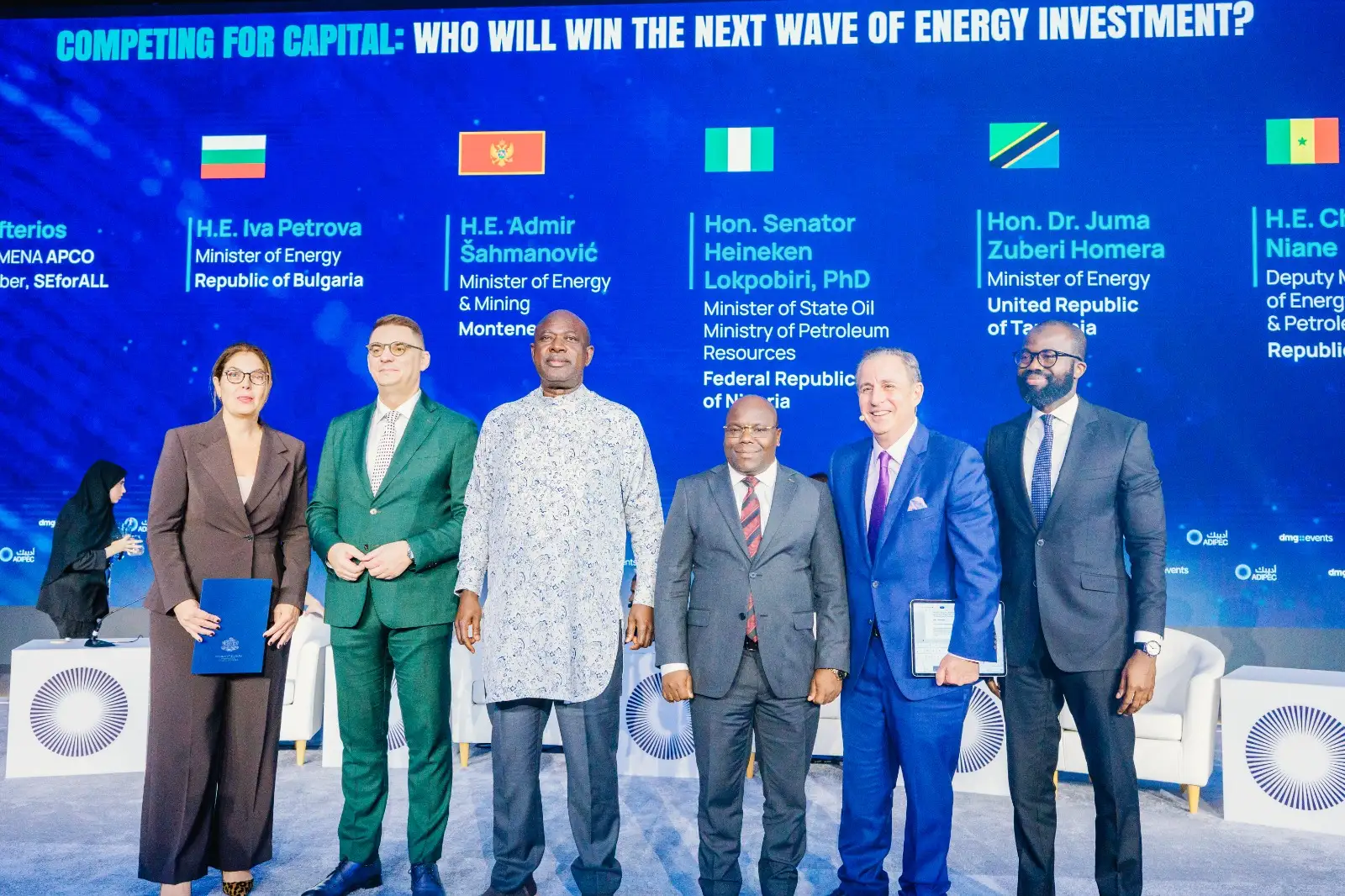
Tanzania Highlights LNG, Solar and Hydropower Opportunities at ADIPEC 2026
Tanzania has unveiled major energy investment opportunities at ADIPEC 2026 in Abu Dhabi, highlighting its 57.54 trillion cubic feet of natural gas resources, renewable energy potential and plans to mobilise US$4.039 billion in private-sector investment under the National Energy Compact.
ABU DHABI, United Arab Emirates, November 2, 2026 — Tanzania has outlined ambitious plans to attract substantial domestic and international investment in its energy sector, positioning itself as an emerging regional energy hub amid growing global demand for energy security, sustainable infrastructure and diversified energy supplies.
Speaking at the Abu Dhabi International Petroleum Exhibition and Conference (ADIPEC 2026) in the United Arab Emirates, Tanzania’s Minister for Energy, Hon. Dr. Juma Zuberi Homera, reaffirmed the Government’s commitment to unlocking investment opportunities across the country's natural gas, electricity and renewable energy industries.
Dr. Homera said Tanzania was strategically positioning itself to attract international capital at a time when energy security has become a major global priority, driven by geopolitical tensions and disruptions to international supply chains.
He highlighted Tanzania’s substantial energy resource potential, including approximately 57.54 trillion cubic feet of natural gas, which presents significant opportunities for investment in liquefied natural gas (LNG) and small-scale LNG (Mini-LNG) projects.
The Minister also outlined investment opportunities across the electricity sector, citing the 2,115-megawatt Julius Nyerere Hydropower Project, the 150-megawatt Kishapu Solar Power Project, wind energy developments in Singida Region, and geothermal energy potential in Mbeya and Songwe regions.
Dr. Homera emphasised that Tanzania’s strategic geographical location provides a competitive advantage in positioning the country as a regional energy trading hub, particularly through the interconnected electricity markets of East and Southern Africa.
He underscored the importance of predictable investment policies, robust legal and regulatory frameworks, streamlined administrative procedures and well-prepared, bankable projects supported by comprehensive feasibility studies.
According to the Minister, these measures are essential to strengthening Tanzania’s competitiveness in attracting international financing and accelerating the implementation of major energy infrastructure projects.
Under the leadership of H.E. President Dr. Samia Suluhu Hassan, the Government continues to implement the National Energy Compact, which seeks to mobilise approximately US$4.039 billion in private-sector investment to advance the country's energy development priorities.
Key investment areas under the initiative include renewable energy generation, the expansion and modernisation of electricity transmission infrastructure, and the promotion of public-private partnerships (PPPs) to support sustainable energy development.
Dr. Homera reaffirmed that effective implementation of these strategies would enable Tanzania to transform its abundant energy resources into commercially viable projects, stimulate economic growth, attract international investors and strengthen the country's position in regional and global energy markets.
He further emphasised that Tanzania remains committed to creating a competitive, transparent and investor-friendly environment capable of supporting long-term investment in the energy sector.
The 2026 ADIPEC conference is taking place from November 2–5, 2026, at the ADNEC Centre in Abu Dhabi, bringing together international energy policymakers, investors and industry leaders.