

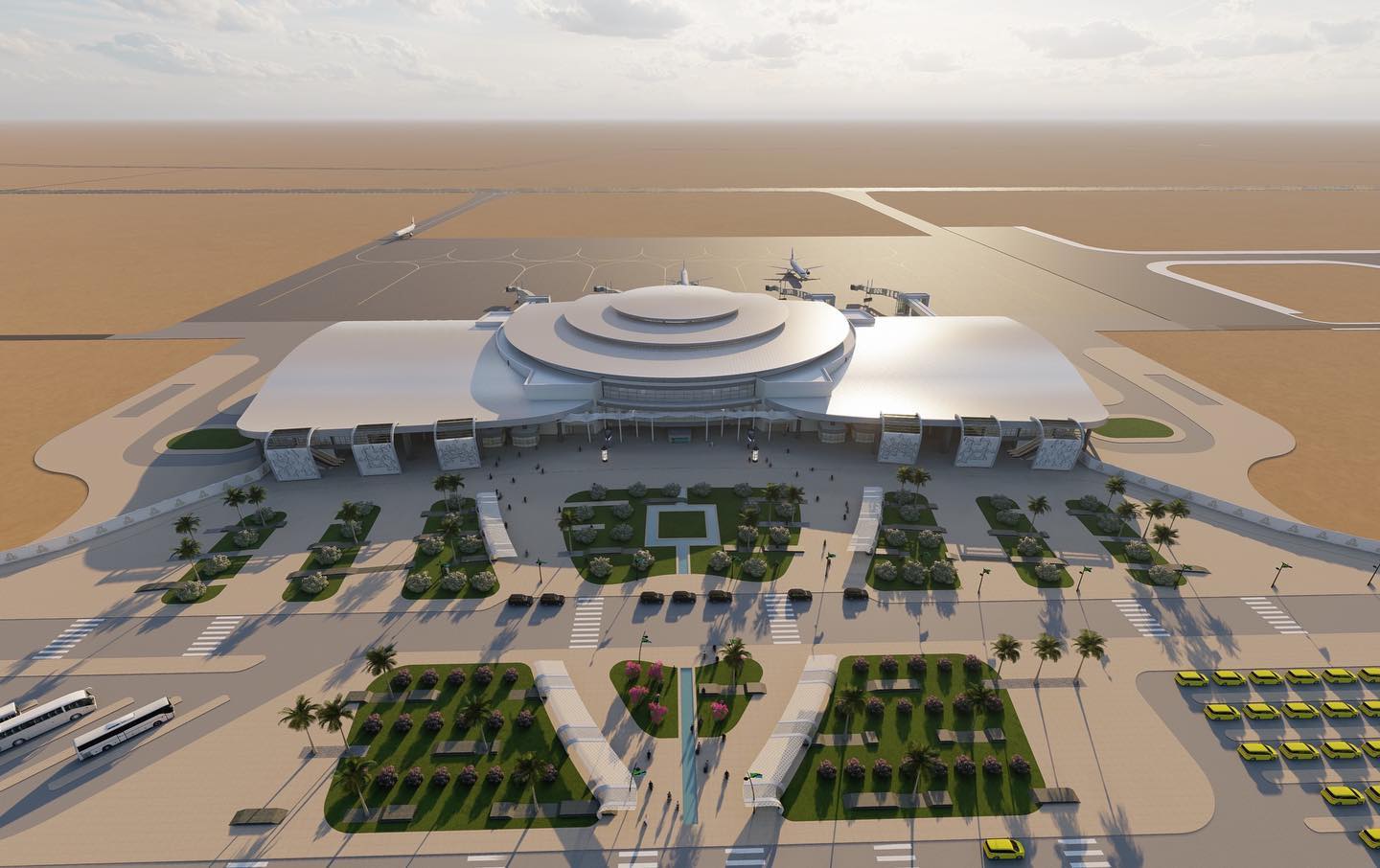
Msalato International Airport: Tanzania’s New Gateway to Investment and Trade
Msalato International Airport is emerging as a major transport gateway for Dodoma. Explore how the project could strengthen aviation, tourism, trade, logistics, investment and urban development in central Tanzania.
The development of Msalato International Airport is emerging as one of the most significant transport infrastructure investments in Dodoma, with the potential to reshape how Tanzania’s capital connects to the rest of the country, the region and international markets.
Located in Dodoma, Msalato is being developed as a modern international airport with a 3,600-metre runway, taxiway, aircraft apron, access roads, passenger terminal and supporting aviation infrastructure. The Tanzania Airports Authority (TAA) currently lists both the infrastructure and buildings components of the project as ongoing.
The project matters beyond aviation.
For Dodoma, an international airport can become a platform for investment, tourism, business travel, logistics, conferences, real estate, hospitality and wider urban development.
For Tanzania, it fits into a much larger ambition: building an integrated transport and logistics system capable of supporting domestic economic activity, regional trade and international competitiveness.
Why Msalato Matters to Dodoma
Dodoma has increasingly become the centre of Tanzania's government and national administration.
As the capital grows, demand for efficient connections between Dodoma and other regions—and between Dodoma and international destinations—is also increasing.
Msalato is designed to respond to that changing role.
The Tanzania Development Vision 2050 identifies Integrated Logistics as one of the strategic drivers of national transformation. It defines integrated logistics as the coordinated movement of people, goods, services and information through production, transportation, warehousing, distribution and delivery systems.
This means an airport should not be viewed simply as a place where aircraft land.
It is part of a larger economic network.
Airport → Roads → Rail → Hotels → Businesses → Markets → Investment
That is where Msalato's wider economic significance lies.
A Major Aviation Infrastructure Investment
According to TAA, the first infrastructure package includes a 60-metre-wide, 3,600-metre runway, a taxiway measuring 44 by 369 metres, an aircraft apron of approximately 112,046 square metres, a main access road and car parking facilities. The listed value of this package is approximately TZS 165.627 billion, financed by the African Development Bank (AfDB).
The airport's buildings package includes a 22,500-square-metre passenger terminal designed to handle approximately 1.5 million passengers annually. TAA lists the package at approximately TZS 194.403 billion, also supported by AfDB financing.
Recent reporting has also highlighted additional aviation facilities, including an air traffic control tower, fire and rescue station, meteorological facilities and other supporting infrastructure.
Together, these components position Msalato as substantially more than an incremental expansion of existing airport capacity.
Msalato and Tanzania's Integrated Transport Strategy
Dira 2050 identifies Tanzania's geographical position as an opportunity to become a premier gateway for Eastern and Southern Africa and a stronger logistics and trade hub for East and Central Africa.
The Vision highlights investments in:
- Roads
- Standard Gauge Railway
- Ports
- Airports
- Air transport
- Digital logistics
- Cross-border systems
as part of the country's effort to strengthen domestic and regional connectivity.
The strategy is therefore based on multimodal connectivity.
For Msalato, the airport's full economic potential will depend on how effectively it connects with roads, the railway system, urban transport and other logistics infrastructure.
The Airport–Road–Rail Connection
An airport becomes significantly more valuable when passengers and cargo can move efficiently beyond its perimeter.
This makes the surrounding road network particularly important.
Recent infrastructure planning for Dodoma has included improvements intended to strengthen connections toward Msalato Airport, the SGR station and the Central Business District.
This creates the possibility of a connected transport system:
Msalato Airport
↓
Urban Roads
↓
Dodoma CBD
↓
SGR
↓
National Road Network
The result could be faster movement of people and goods and stronger connections between Dodoma and Tanzania's wider economic network.
From Government Capital to Business Gateway
One of the most important potential effects of Msalato is its ability to strengthen Dodoma's transition from an administrative capital into a more diversified business and investment centre.
A modern international airport can make it easier for:
- Investors to reach Dodoma
- Businesses to host international partners
- Government institutions to engage international stakeholders
- Conference organisers to attract international delegates
- Tourism operators to develop new itineraries
- Companies to move specialised goods
- Professionals to travel between Tanzania and international markets
The economic effect can therefore extend far beyond aviation.
Tourism Could Be a Major Beneficiary
Improved air connectivity can also reshape Tanzania's tourism geography.
The country's tourism strategy increasingly focuses on developing a broader destination experience encompassing wildlife, culture, heritage, adventure, MICE and other tourism products.
Transport is a critical part of that ecosystem.
The tourism-sector reference material identifies air, road, rail and marine transportation as important components of tourism investment and notes that better connectivity can unlock destinations that have strong tourism potential but remain less accessible.
For Dodoma, Msalato could strengthen connections between the capital and tourism circuits in central and northern Tanzania while supporting business and conference tourism.
MICE Tourism: A New Opportunity for Dodoma
Dodoma's role as the national capital gives it a natural advantage in Meetings, Incentives, Conferences and Exhibitions (MICE).
An international airport can strengthen that advantage.
International delegates typically require:
Air connectivity → Hotels → Conference venues → Restaurants → Local transport → Tourism experiences
This creates opportunities across the hospitality and service economy.
A stronger MICE ecosystem could therefore generate demand for:
- Hotels
- Conference centres
- Restaurants
- Event management
- Transport
- Technology services
- Professional services
- Tourism experiences
Msalato could become one of the infrastructure foundations supporting this emerging market.
Investment Opportunities Around the Airport
Major airports often generate economic activity beyond their terminals.
The development of Msalato could stimulate investment in:
Hospitality
Hotels, business accommodation, serviced apartments and conference facilities.
Commercial Real Estate
Office buildings, retail centres and mixed-use developments.
Logistics
Warehousing, freight services, distribution and specialised transport.
Aviation Services
Ground handling, aircraft support, catering, maintenance and other aviation-related services.
Retail and Services
Restaurants, shopping, banking, car rental and passenger services.
Tourism
Tour operations, cultural experiences and business-tourism services.
Technology
Travel technology, digital payments, logistics platforms and smart mobility services.
The wider opportunity is to develop an airport economic zone, where aviation infrastructure becomes a catalyst for surrounding businesses.
SMEs Could Benefit From the Airport Economy
The airport's economic impact should not be measured only by airlines and major investors.
Small and medium enterprises could participate across the wider value chain.
Potential opportunities include:
- Taxi and transport services
- Catering
- Cleaning
- Security
- Vehicle rental
- Hotels and guesthouses
- Restaurants
- Local tourism
- Logistics
- Retail
- Digital services
- Maintenance
- Construction supply
- Professional services
This creates a direct connection between airport investment and local enterprise development.
Msalato and Regional Trade
Dira 2050's logistics strategy aims to position Tanzania as a stronger gateway for East, Central and Southern Africa, supported by multimodal transport infrastructure and more efficient trade systems.
An international airport in the capital can complement Tanzania's wider network of:
Ports + Airports + SGR + Roads + Border Posts + Digital Logistics
The country's transport infrastructure can therefore function as an interconnected system rather than a collection of individual projects.
That is particularly important for businesses that depend on speed and reliability.
The Digital Opportunity
Modern transport infrastructure increasingly depends on digital systems.
Dira 2050 highlights digital technologies as important for improving document processing, inventory management, shipment tracking and overall supply-chain efficiency.
For Msalato, the opportunity extends to:
- Digital passenger services
- Smart airport systems
- Automated processing
- Digital cargo tracking
- Integrated transport information
- Digital payments
- Real-time flight information
- Data-driven logistics
The airport of the future is not simply a physical facility.
It is a connected digital gateway.
Connectivity and the Cost of Doing Business
Tanzania's Dira 2050 identifies logistics costs and delays as challenges that continue to affect competitiveness.
The Vision notes that logistics costs account for 35–45 percent of total import costs, including insurance and freight, and links high costs partly to delays, insufficient handling and storage facilities and weaknesses in transport and logistics networks.
This makes efficient infrastructure particularly important.
Better connectivity can help businesses reduce:
- Travel time
- Delivery delays
- Handling inefficiencies
- Market-access barriers
- Unnecessary logistics costs
For investors, connectivity is therefore not simply an infrastructure issue.
It is a competitiveness issue.
Dodoma's Urban Transformation
Msalato is also likely to influence how Dodoma grows.
A major international gateway can increase demand for:
Hotels → Offices → Housing → Retail → Restaurants → Transport → Warehouses → Services
That can accelerate development around strategic transport corridors.
But growth will need to be planned carefully.
The objective should be to create a productive and well-connected capital, rather than uncontrolled expansion.
This means coordinating:
- Airport planning
- Road development
- Public transport
- Land use
- Housing
- Commercial development
- Utilities
- Environmental management
Jobs and Local Economic Participation
Airport construction and operation can create employment directly and indirectly.
Earlier project reporting by TAA recorded substantial employment during construction, including Tanzanian workers involved in both the runway infrastructure and passenger terminal components.
The longer-term opportunity is even broader.
Once the airport becomes operational, employment can extend across:
Aviation + Hospitality + Tourism + Transport + Logistics + Retail + Construction + Professional Services + Technology
This is where infrastructure investment becomes economic transformation.
The Bigger Picture: Msalato as a National Gateway
The most important way to understand Msalato is not simply as Dodoma's new airport.
It is potentially a new node within Tanzania's national transport network.
The country is investing in roads, railways, ports and airports while strengthening digital logistics and regional connectivity. Dira 2050 describes the goal as an integrated logistics network with a competitive multimodal transport system and modernised infrastructure supporting domestic and international trade.
Msalato fits naturally into that architecture.
Airport + SGR + Roads
creates
Faster Movement + Better Access
which can support
Tourism + Trade + Investment + Jobs
which ultimately contributes to
Economic Transformation
What Will Determine Msalato's Impact?
The airport itself is only the beginning.
Its economic impact will depend on several factors:
1. Efficient road connections
Passengers and cargo need reliable access to the city and national road network.
2. Rail integration
Connections with SGR can create a stronger multimodal transport system.
3. Airline connectivity
The value of an international airport ultimately depends on routes, frequencies and competitive air services.
4. Cargo development
Freight and logistics services can expand the airport's economic contribution.
5. Investment around the airport
Hotels, logistics, commercial property and aviation services can create an airport economy.
6. Digital systems
Smart passenger and cargo systems can improve efficiency.
7. Urban planning
Growth around the airport needs to be coordinated with Dodoma's wider development.
8. Tourism integration
The airport should be connected to broader Destination Tanzania tourism circuits.
Progress.tz Take
Msalato International Airport is more than an aviation project. It is a potential economic gateway for Dodoma and central Tanzania.
Its significance will ultimately be determined by what happens around the airport.
If it connects efficiently with roads, SGR, the city, tourism destinations and national logistics networks, Msalato could help create a stronger ecosystem for:
Investment
Tourism
Trade
MICE
Logistics
Real estate
SMEs
Jobs
Regional connectivity
Dira 2050's transport vision is clear: Tanzania wants an integrated, competitive and modern multimodal transport system capable of supporting domestic, regional and international trade.
Msalato can become an important piece of that network.
The question for Progress.tz is therefore not only:
When will the airport open?
It is:
What new economic activity will the airport unlock?
That is the story worth tracking—from construction to connectivity, from connectivity to investment, and from investment to measurable economic progress.