

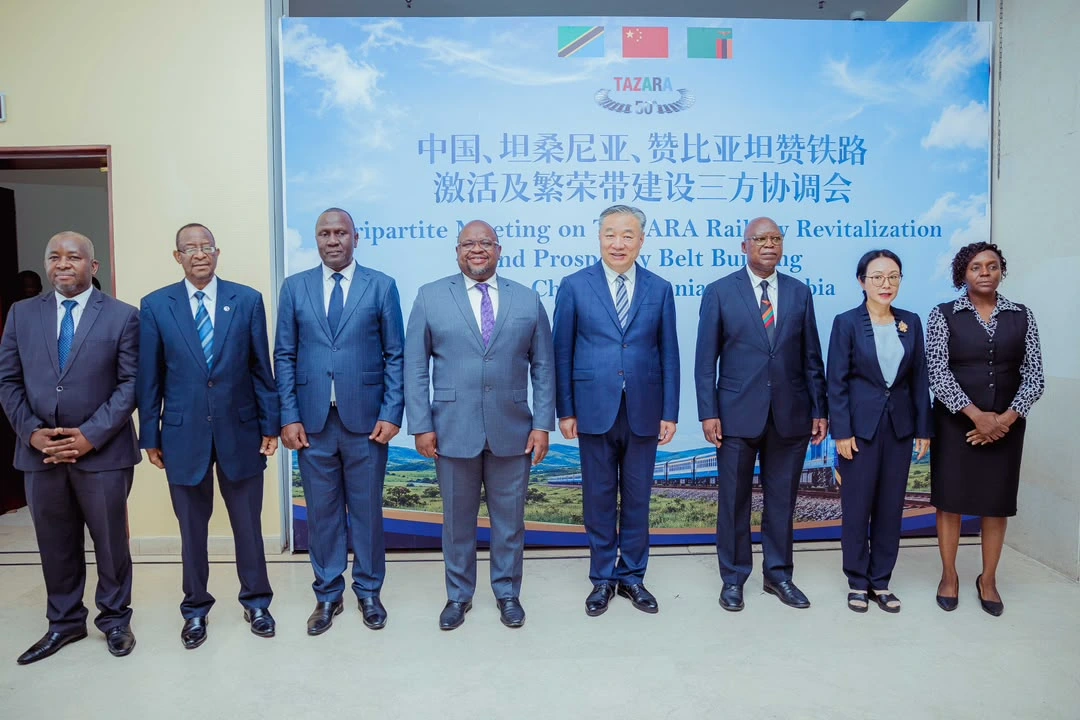
Tanzania, China and Zambia Advance Strategic Railway Cooperation
Tanzania, China and Zambia have agreed to revitalise the historic TAZARA railway through enhanced trilateral cooperation, aiming to strengthen regional trade, improve transport efficiency, attract investment and develop a prosperity corridor across Eastern and Southern Africa.
The three countries have pledged to strengthen economic cooperation through the revitalisation of the historic railway, aiming to reduce transport costs, attract investment and improve regional connectivity.
Dar es Salaam, Tanzania | 24 November 2026
Tanzania, China and Zambia have agreed to strengthen trilateral cooperation through the rehabilitation and modernisation of the Tanzania–Zambia Railway (TAZARA), in a move aimed at accelerating regional economic integration, facilitating cross-border trade and improving transport connectivity across Eastern and Southern Africa.
The agreement was reached during a trilateral meeting on the revitalisation of TAZARA and the development of a prosperity corridor, held in Dar es Salaam on Tuesday, 24 November 2026.
Tanzania’s delegation was led by Deputy Minister for Foreign Affairs and East African Cooperation, Dr Ngwaru Maghembe, while China was represented by Vice Minister of Foreign Affairs Miao Deyu. Zambia’s delegation was headed by Deputy Minister of Finance and Economic Development Siazongo Siakalenge.
Transforming TAZARA into a modern economic corridor
Addressing the meeting, Dr Maghembe said Tanzania recognised the strategic importance of TAZARA and its contribution to the national economy and regional development.
He said the discussions came as Tanzania continued investing in the modernisation of its ports, roads, railways and airports as part of efforts to achieve the objectives of National Development Vision 2050.
The deputy minister said the meeting provided an opportunity for the three countries to develop strategies for transforming TAZARA into a modern, efficient and commercially competitive railway capable of supporting trade, investment and sustainable economic growth.
He also emphasised the importance of translating the agreements into concrete action to ensure the railway delivers its intended economic and development benefits.
Strengthening regional trade and connectivity
The proposed revitalisation is expected to strengthen transport links between Tanzania and Zambia while supporting wider economic integration across Eastern and Southern Africa.
By improving railway efficiency and freight transport capacity, the initiative aims to reduce logistics costs, facilitate the movement of goods, strengthen regional supply chains and create a more attractive environment for investment.
The railway provides Zambia, a landlocked country, with a strategic transport connection to the Port of Dar es Salaam and international markets.
Its modernisation could also reinforce Tanzania’s position as a regional transport and logistics gateway, supporting the movement of agricultural products, minerals and other commercial goods.
A historic symbol of Tanzania–China–Zambia friendship
Officially inaugurated in 1976, TAZARA remains one of the most significant infrastructure projects associated with cooperation between China and Africa.
The three countries acknowledged the railway’s historical importance as a symbol of friendship, solidarity and South–South cooperation.
Five decades after its inauguration, renewed efforts to modernise the railway reflect a shared ambition to transform this historic infrastructure into a competitive economic corridor capable of responding to contemporary transport and commercial demands.
Supporting Tanzania’s Vision 2050
The initiative aligns with Tanzania’s National Development Vision 2050, which seeks to advance economic transformation through infrastructure development, industrialisation, investment and improved regional connectivity.
Beyond improving railway operations, the proposed prosperity corridor is intended to stimulate commercial activity, strengthen regional value chains and unlock new investment opportunities.
The success of the initiative will depend on the effective implementation of the agreements and continued coordination between Tanzania, China and Zambia.
Details of the implementation timetable, financing arrangements and specific infrastructure upgrades were not included in the information provided.