

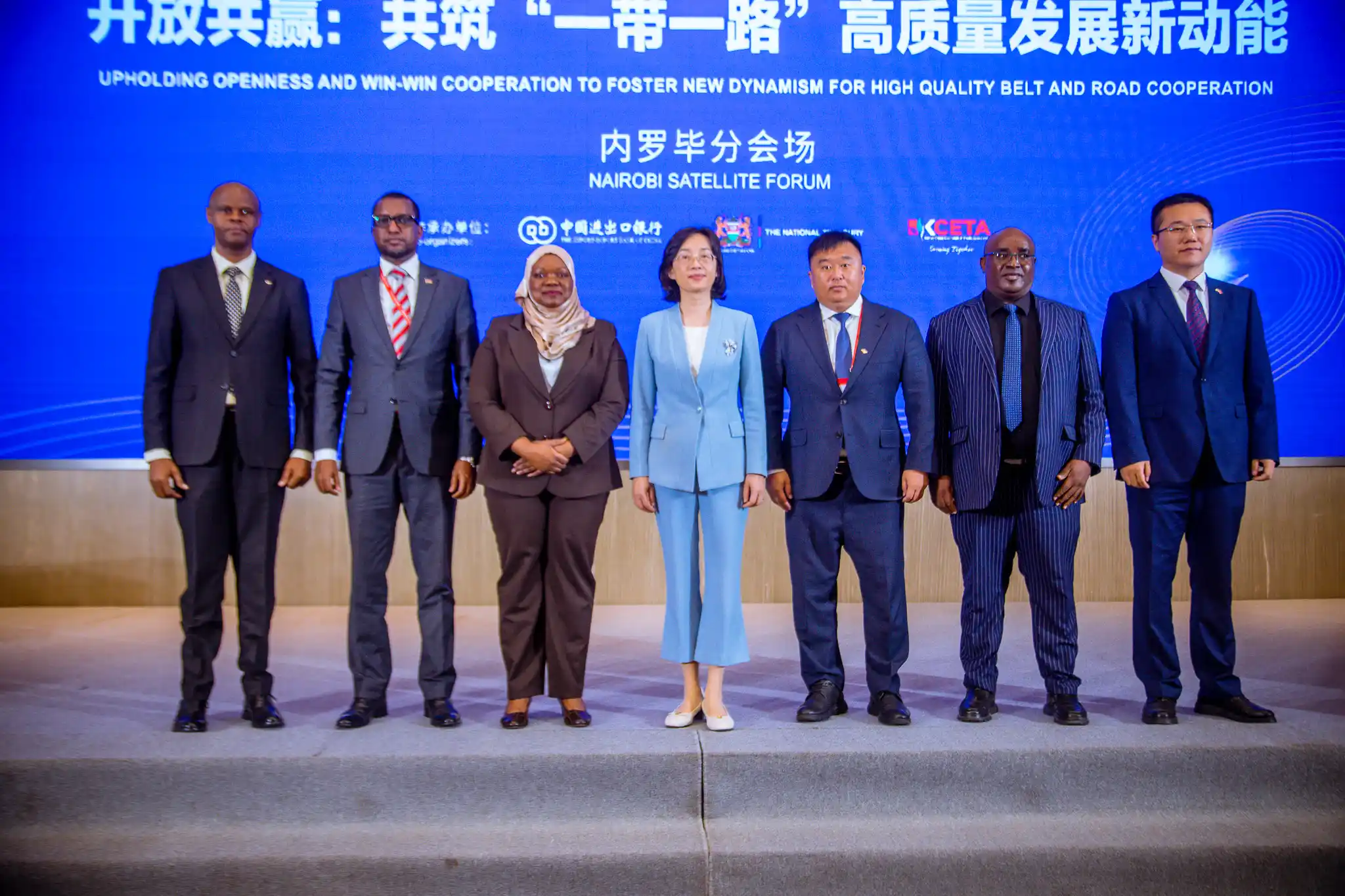
Tanzania Backs Belt and Road Cooperation to Boost Trade and Investment
Tanzania has reaffirmed its commitment to economic cooperation with China through the Belt and Road Initiative, highlighting strategic infrastructure development and the planned modernisation of TAZARA to improve regional connectivity and trade.
Tanzania has reaffirmed its commitment to strengthening economic cooperation with China through the Belt and Road Initiative (BRI), advancing strategic projects in transport, energy, communications and infrastructure to support economic growth, expand trade and investment opportunities, and improve citizens’ livelihoods.
Speaking at the Belt and Road Initiative Forum in Nairobi, Kenya, on behalf of the Minister for Finance, Hon. Ambassador Khamis Mussa Omar (MP), the Deputy Permanent Secretary in the Ministry of Finance, Ms Asha Khamis Abdulla, said cooperation between Tanzania and China continued to create development opportunities in infrastructure, trade, investment and industrial transformation.
Ms Abdulla said Tanzania recognised the BRI as an important platform for strengthening economic and financial cooperation among countries while promoting sustainable and inclusive development aligned with national priorities.
“The longstanding relationship between Tanzania and China, founded on mutual respect, trust and solidarity, has continued to strengthen cooperation in infrastructure, trade, investment, energy and industrial transformation,” she said.
She emphasised that Tanzania would continue working with China and other countries to implement development projects aligned with national priorities and the objectives of Vision 2050, with a view to increasing productivity, expanding the economy and improving citizens’ well-being.
Ms Abdulla also highlighted Tanzania’s ongoing collaboration with Zambia and China to revitalise and modernise the Tanzania–Zambia Railway (TAZARA) through a public-private partnership (PPP).
Once completed, the project is expected to improve transport efficiency, reduce freight costs and facilitate regional trade, stimulating economic activity and strengthening market connectivity across Southern Africa.