

Munde Challenges Statistics Graduates to Drive Economic Progress
Tanzania has called for greater use of reliable statistics to strengthen economic management, improve public spending and advance Vision 2050, as EASTC reports increased enrolment and academic capacity.
TANZANIA URGES USE OF QUALITY STATISTICS TO GUIDE ECONOMIC MANAGEMENT
The Government has emphasised the importance of accurate, high-quality statistics in managing the national economy, describing reliable data as the foundation for sound decisions on development planning, public expenditure and investment across sectors.
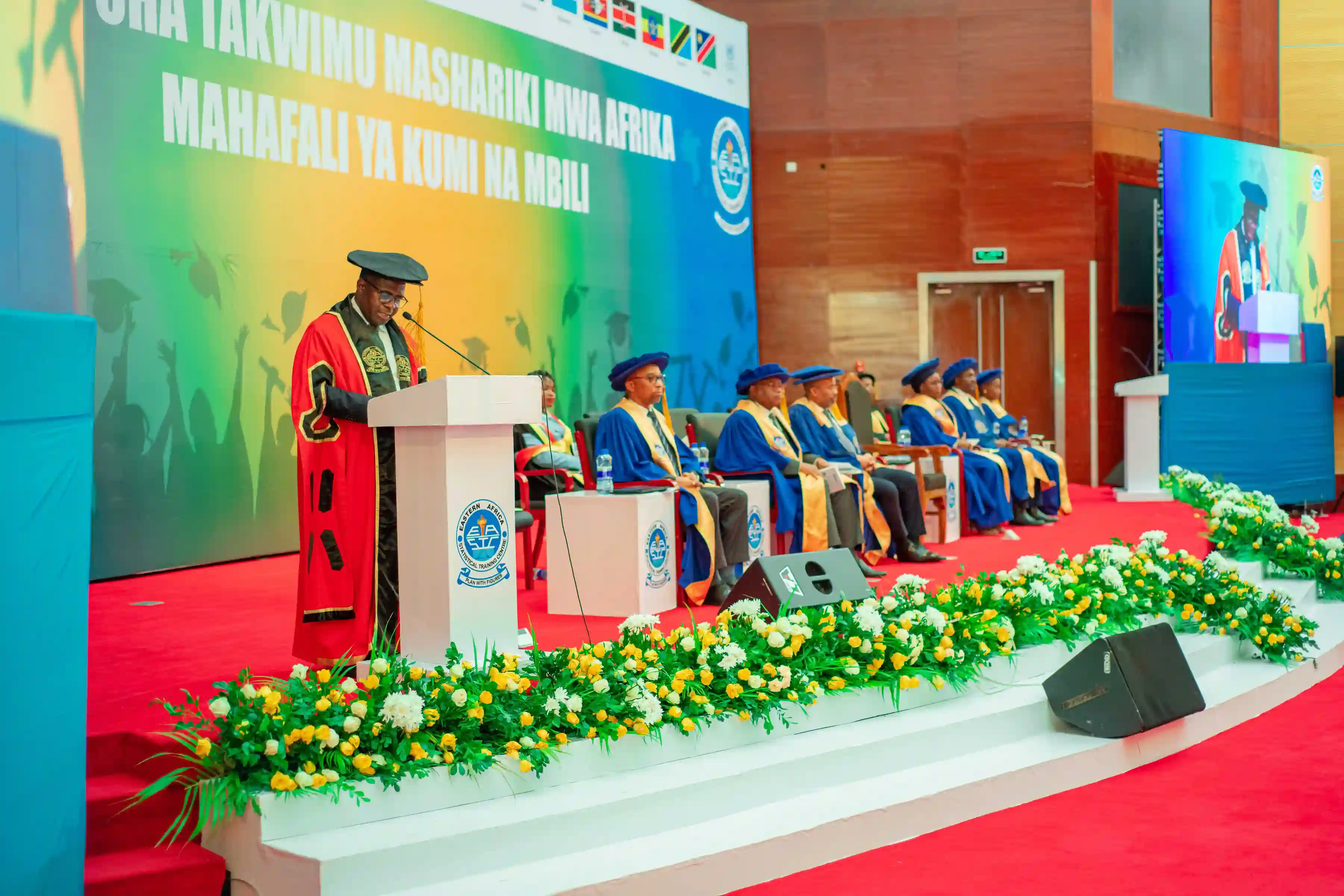
The call was made by Deputy Minister for Finance, Hon. Eng. Mshamu Ali Munde (MP), on behalf of Minister for Finance, Hon. Ambassador Khamis Mussa Omar (MP), during the 12th Graduation Ceremony of the Eastern Africa Statistical Training Centre (EASTC), held at the Julius Nyerere International Convention Centre (JNICC) in Dar es Salaam.
Munde said statistics are essential to ensuring that national resources are used efficiently and directed towards areas of greatest need and public benefit.
“Quality statistics enable us to assess whether expenditure is delivering the intended results and whether services are reaching citizens,” he said.
He stressed that decisions on economic management and public finances should be guided by statistical evidence rather than estimates unsupported by reliable information.
Munde said the use of statistics is critical to achieving Vision 2050, which seeks to build a strong, inclusive and competitive economy, strengthen human capabilities and social development, protect the environment and enhance climate resilience.
Achieving these goals, he said, requires professionals capable of producing, analysing and applying statistics to identify economic opportunities, improve productivity and measure the results of development projects.
He directed graduates and statistical professionals across the country to uphold data accuracy, maintain confidentiality and report analytical findings honestly.
Munde also noted that technological advances and digital transformation are increasing the importance of statistics in business management, production and public service delivery.
“I encourage you to use your education not only to seek employment but also to establish economic ventures. Opportunities exist in agriculture, tourism, manufacturing, construction and real estate, mining, the blue economy, sports and creative industries, financial services and other services,” he said.
He encouraged graduates to apply their statistical knowledge to identify markets, assess customer demand and make informed investment decisions in these sectors.
He also called on stakeholders in official statistics to work with the Government to develop and monitor development indicators, particularly those supporting Vision 2050 and the 2030 Sustainable Development Goals.
Such statistics, he said, would help measure progress, identify challenges and establish which groups have yet to benefit adequately from development opportunities.
EASTC Rector Dr. Tumaini Katunzi said the institution had made significant progress, with student enrolment rising from 439 in the 2021/2022 academic year to 2,152 in 2025/2026, reflecting growing demand for statistical professionals.
The number of lecturers holding doctoral degrees also increased from five to 16 over the same period. The institution has expanded its academic programmes at various levels to train more professionals with skills relevant to economic and development sectors.
Dr. Katunzi said EASTC had strengthened its regional role by expanding cooperation with institutions within Tanzania and abroad, including the University of Turin in Italy, the Nelson Mandela African Institution of Science and Technology, and Jaramogi Oginga Odinga University of Science and Technology in Kenya.
Through these partnerships, he said, EASTC has provided training in statistics and leadership to professionals from Southern African Development Community (SADC) countries, promoting knowledge exchange and strengthening Member States’ capacity to use statistics in planning and managing economic development.